
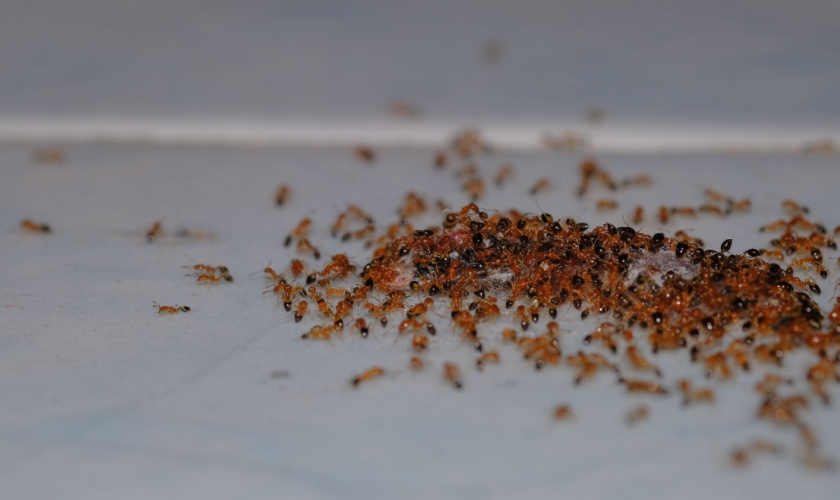
Walk through any San Jose neighborhood in spring and you’ll notice the same thing: ants are everywhere. They slip into kitchens, trail across patios, and seem to reappear no matter how many times you sweep them away. This isn’t coincidence—it’s the result of specific conditions in the South Bay that make homes here especially vulnerable. To understand how to stop them, we need to look at the reasons San Jose has become such a hotspot for ant infestations.
San Jose’s Mild Climate Keeps Ants Active
San Jose’s Mediterranean climate is one of the biggest culprits behind frequent ant problems. Unlike colder regions where freezing temperatures force colonies into dormancy, the South Bay’s mild winters allow ants to remain active year-round. This means homeowners don’t get a seasonal “break” from infestations—ants are constantly foraging, nesting, and expanding their colonies.
Warm summers only intensify the issue. Higher temperatures accelerate ant metabolism, making them hungrier and more aggressive in their search for food. As a result, San Jose homes experience waves of ant activity throughout the year, with little relief in between.
Moisture Sources Around Homes
Water is essential for ant survival, and San Jose’s environment provides plenty of it. Irrigation systems, leaky outdoor faucets, and even the region’s morning fog create consistent moisture sources that ants can exploit. Indoors, bathrooms, kitchens, and laundry rooms often become hotspots because of dripping pipes or condensation.
Moisture doesn’t just attract ants—it also helps sustain their colonies. Damp soil around foundations or under landscaping provides ideal nesting conditions. Once ants establish themselves near a home, it’s only a matter of time before they find their way inside.
Easy Access Through Small Openings
Ants are masters of infiltration. Their small size allows them to squeeze through cracks and gaps that most homeowners overlook. Common entry points include:
- Gaps around doors and windows
- Cracks in foundations or exterior walls
- Utility line openings (pipes, vents, cables)
- Poorly sealed kitchen or bathroom fixtures
- Garage thresholds and pet doors
Even homes that appear well-sealed can have vulnerabilities. For example, weather stripping that has worn down or caulking that has cracked over time can create tiny openings. Once ants discover these pathways, they leave pheromone trails for the rest of the colony, ensuring that the invasion continues.
The Prevalence of Argentine Ants
San Jose is home to several ant species, but Argentine ants are the most notorious. These invasive ants form massive “supercolonies” that can stretch across entire neighborhoods. Unlike other species that compete with each other, Argentine ants cooperate, allowing their populations to grow unchecked.
Their aggressive behavior makes them particularly difficult to control. They quickly overwhelm food sources, displace native ant species, and spread into homes in large numbers. Because of their resilience and sheer scale, DIY treatments often fail to make a dent in Argentine ant infestations.
Food and Waste Inside Homes
Ants are opportunistic feeders, and San Jose homes provide plenty of opportunities. Even small crumbs, forgotten spills, or overflowing trash cans can attract them. Pet food left out overnight or recycling bins with sticky residue are common triggers for infestations.
Once ants find a reliable food source, they communicate its location to the colony using pheromone trails. This is why a single ant sighting can quickly escalate into dozens or even hundreds. Without addressing the food and waste issue, infestations will continue to return no matter how many times ants are removed.
How San Jose Homeowners Can Fight Back
While ant infestations are common, they’re not inevitable. Preventive steps like sealing entry points, storing food in airtight containers, trimming vegetation near walls, and cleaning up spills promptly can make a big difference. Natural deterrents such as vinegar or lemon juice near entryways can also help discourage ants.
Another effective strategy is to focus on the exterior of your property. Ants often establish colonies in soil, mulch, or landscaping close to the foundation. By keeping mulch layers thin, moving firewood away from the house, and trimming back shrubs or tree branches that touch exterior walls, you reduce the pathways ants use to reach your home. Regularly inspecting outdoor areas for nests and treating them early can stop infestations before they spread indoors.
It’s also important to understand that ant control is not a one-time effort but an ongoing process. Even after eliminating a colony, new ones can form nearby and attempt to invade again. Setting up a consistent routine—whether it’s seasonal inspections, regular cleaning habits, or scheduled professional treatments—helps maintain long-term protection. This proactive approach ensures your home stays less vulnerable to recurring infestations.
But prevention alone isn’t always enough. Once a colony is established, DIY remedies often fall short. That’s when professional residential ant control in San Jose becomes essential.
Ending Ant Problems Where They Begin
The reasons ants are so common in San Jose—year‑round activity, moisture, hidden entry points, and invasive species—show that infestations aren’t just surface issues. They’re rooted in the environment and the way colonies operate. That’s why lasting control requires more than temporary fixes.
At Citra Pest Control, we focus on stopping ants at the source. Our technicians know how to trace infestations back to the colonies fueling them, apply safe treatments that protect your family and pets, and build barriers that keep ants from coming back. Because we’re local, we understand the exact conditions that make San Jose homes vulnerable, and we design solutions that fit those realities.
Your family deserves a home free from stress and pests. Reach out to Citra Pest Control for a free quote, and let us safeguard the spaces where you live, eat, and relax.
