
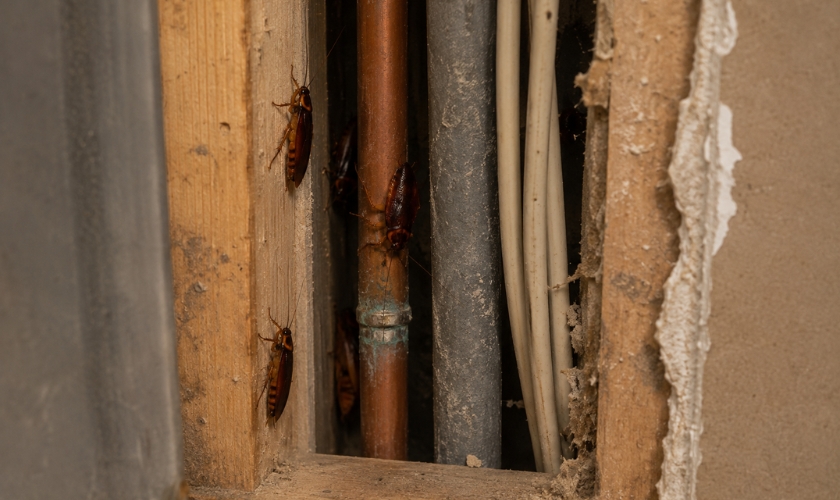
Cockroach problems in San Jose apartments and townhomes are often building-wide, which is why they can be so persistent for any one resident. A household can keep its own space spotless and still see roaches, because the pests are moving in from somewhere else in the building. Understanding where these roaches come from explains why they are so difficult to control alone and why professional cockroach control built for shared housing works best.
Neighboring Units
The most common source of roaches in attached housing is a neighboring unit. When one apartment or townhome develops an infestation, the roaches do not stay put. As their numbers grow, they spread to adjacent units in search of food, water, and shelter. A resident who keeps a clean home can still end up with roaches simply because a neighbor has an untreated problem. This is why treating one unit in isolation so often fails. The roaches simply retreat into the walls and return once the treatment fades, arriving again from the same neighboring source.
Shared Walls and Voids
The construction of apartments and townhomes gives roaches ready-made pathways. Shared walls contain voids that roaches use to travel between units, and the gaps around framing and fixtures let them move from one home to the next. These hidden spaces are warm, protected, and undisturbed, making them ideal roach highways. Because they are inside the structure, residents have no way to see or reach the roaches moving through them. A unit can look completely roach-free during the day while a population travels through its walls at night.
Plumbing and Utility Lines
Apartments and townhomes share plumbing, electrical, and utility systems, and these create direct routes for cockroaches. Roaches travel along pipes and wiring through the openings where they pass between units and floors. The spaces around plumbing under sinks and behind appliances are common entry points into a unit. This shared infrastructure allows roaches to reach many homes in a building from a single source. Sealing the gaps around pipes within a unit helps, but it cannot close off the shared lines running through the building.
Drains and Moisture Sources
Oriental and American cockroaches, both common in the Bay Area, are drawn to moisture and often enter through floor drains, basement drains, and the damp shared spaces of a building. Laundry rooms, utility areas, and crawl spaces provide the water and shelter these roaches seek. In multi-unit buildings, these shared damp areas can support a roach population that then spreads into individual homes. Addressing the moisture in these common areas is often key to controlling the roaches that reach the units.
Shared Trash and Common Areas
The common areas of apartment and townhome communities can sustain roach populations that spill into units. Shared trash and recycling areas, in particular, provide a steady food source, and roaches move from these areas into nearby homes. Poorly maintained common spaces give roaches a reliable base from which to spread throughout a community. Even a well-kept unit can see roaches when a nearby trash enclosure or laundry room is supporting a population.
Hitchhiking and High Turnover
Roaches are also introduced to buildings by hitchhiking in moving boxes, used furniture, appliances, and grocery deliveries. The higher turnover common in apartments means new items and new residents arrive frequently, each a potential source of roaches. Once introduced, the pests can spread from the original unit throughout the building. This steady potential for reintroduction is part of why shared housing sees such persistent roach problems.
What Residents Can Do
Residents can take steps to limit roach activity in a shared home:
- Seal gaps around pipes, drains, cabinets, and where utilities enter the unit.
- Fix or report leaks and moisture problems promptly.
- Store food in sealed containers and keep trash sealed.
- Inspect secondhand items and deliveries before bringing them in.
- Report roach activity to property management so the building can be addressed.
These steps help within a unit, though a building-wide problem depends on coordinated treatment.
A Coordinated Approach for Shared Housing
Roaches in apartments and townhomes come from shared and neighboring spaces, which means that lasting control depends on treating the building rather than a single unit. Citra Pest Control works with residents and property managers to trace how far an infestation has spread and treat the connected units and common areas together. Residents and property managers in San Jose dealing with roaches in shared housing can contact the team to arrange an assessment and a coordinated plan.